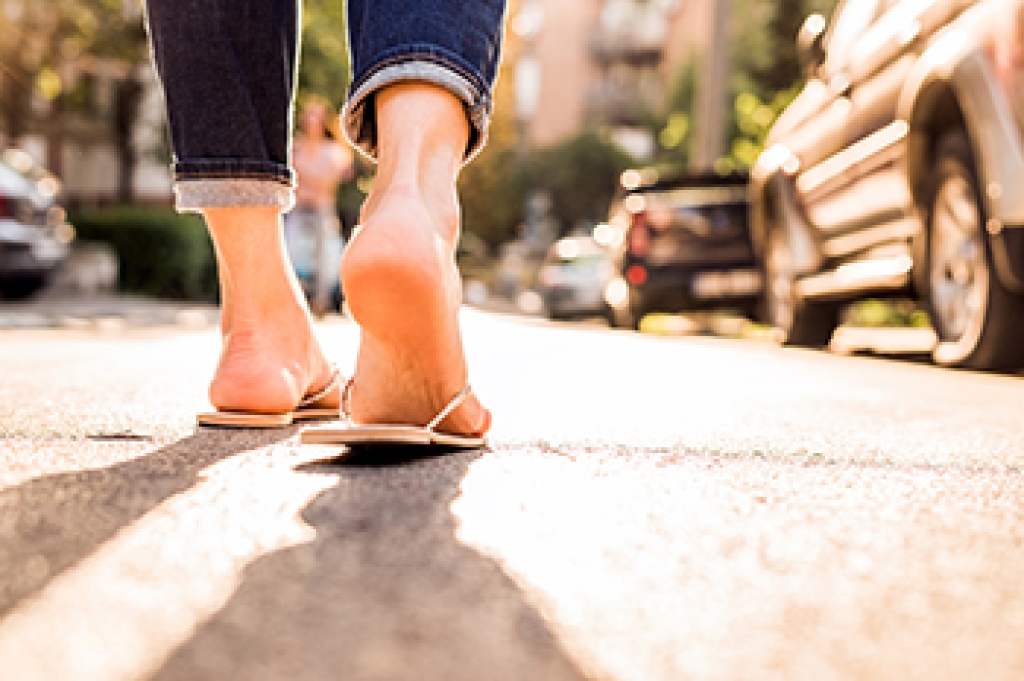
Warm-weather footwear is popular because it is lightweight and easy to wear. However, sandals and flip-flops can contribute to foot pain when they do not provide enough support. Many styles have thin soles, limited cushioning, and little stability. As a result, the feet must work harder to maintain balance and absorb impact while walking. This extra strain can affect the muscles, joints, and soft tissues of the feet. Common problems include arch pain, heel pain, and soreness in the ball of the foot. Some people also develop discomfort in the ankles, knees, or lower back because of changes in walking patterns. Wearing flip-flops or sandals that lack adequate support for extended periods of time can place repeated stress on the feet and increase the risk of painful conditions.
Several foot conditions are linked to frequent use of flip-flops and sandals. Plantar fasciitis, which is an irritation of the thick band of tissue along the bottom of the foot, is one common example. Limited arch support can place extra tension on this tissue. Heel pain is another frequent complaint because thin soles provide little shock absorption. Poorly fitting sandals can also cause calluses, blisters, and skin irritation from repeated rubbing. Open-toed sandals also leave the feet more exposed to cuts, scrapes, and other injuries. High-heeled sandals provide limited stability, increasing the risk of ankle sprains when walking on uneven surfaces.
A podiatrist can determine whether footwear is contributing to foot pain and related symptoms. A thorough examination can identify areas of strain, changes in foot structure, and problems with the way a person walks. Digital imaging scans and X-rays may be ordered to evaluate joint alignment and other concerns. Treatment focuses on reducing pain, improving function, and helping patients choose footwear that better supports foot health. Early evaluation can prevent minor discomfort from developing into a more serious problem. If you have foot pain after wearing sandals or flip-flops, it is suggested that you schedule an appointment with a podiatrist for relief and treatment options.
Flip-flops are not always the best choice of footwear. If you have any concerns about your feet or ankles, contact one of our podiatrists from Podiatry Health Center. Our doctors will assist you with all of your foot and ankle needs.
Flip-Flops and Feet
When the weather starts warming up, people enjoy wearing flip-flops. Flip-flops are comfortable, stylish, and easy to slip on and off; they're perfect for any summer beach goer. However, these shoes can cause harm to the feet.
How Can Flip-Flops Affect Me Long-Term?
- Ankle problems
- Hip problems
- Lower back problems
- Pain in the balls of the feet
- Problems with foot arches
- Changes in the way you walk
Are There Injuries Associated with Flip-Flops?
Yes. Since flip-flops are relatively weak and do not provide the same amount of support as sneakers, people who wear flip-flops regularly are more susceptible to injuries. On top of that, the open nature of the shoe makes your feet more prone to other problems, such as cuts and even infections. Common injuries and ailments include:
- Sprained ankles
- Blisters
- Infections
- Cuts and Scrapes
I like Wearing Flip-Flops. Are There Safe Alternatives?
When buying flip-flops, try to find ones that have sturdy soles and that are made of high-quality materials that will support for your feet. These flip-flops will cost more but will also last longer as a result.
If you have any questions, please feel free to contact our office located in Dothan, AL . We offer the newest diagnostic and treatment technologies for all your foot care needs.
